
Morocco is a land of remarkable natural diversity, where vast deserts meet mountains, valleys, and fertile plains. The country’s landscapes change dramatically from region to region, offering unforgettable natural scenery.
The Moroccan desert, especially the Sahara, is known for its golden sand dunes, wide horizons, and peaceful silence. Places like Merzouga and Zagora reveal the true beauty of the desert through shifting sands and stunning sunsets.
Beyond the desert, Morocco’s natural environment includes green valleys, palm oases, rivers, and waterfalls. These areas provide life and balance within the country’s varied climate.
Nature has shaped the lifestyle of local communities for centuries. Nomadic traditions, oasis farming, and desert architecture reflect human adaptation to the environment.
From sunrise over the dunes to star-filled nights, the desert offers a unique experience rooted in calm, reflection, and natural beauty.
Morocco’s desert and natural landscapes represent harmony between people and nature, creating a powerful connection that continues to inspire travelers from around the world.
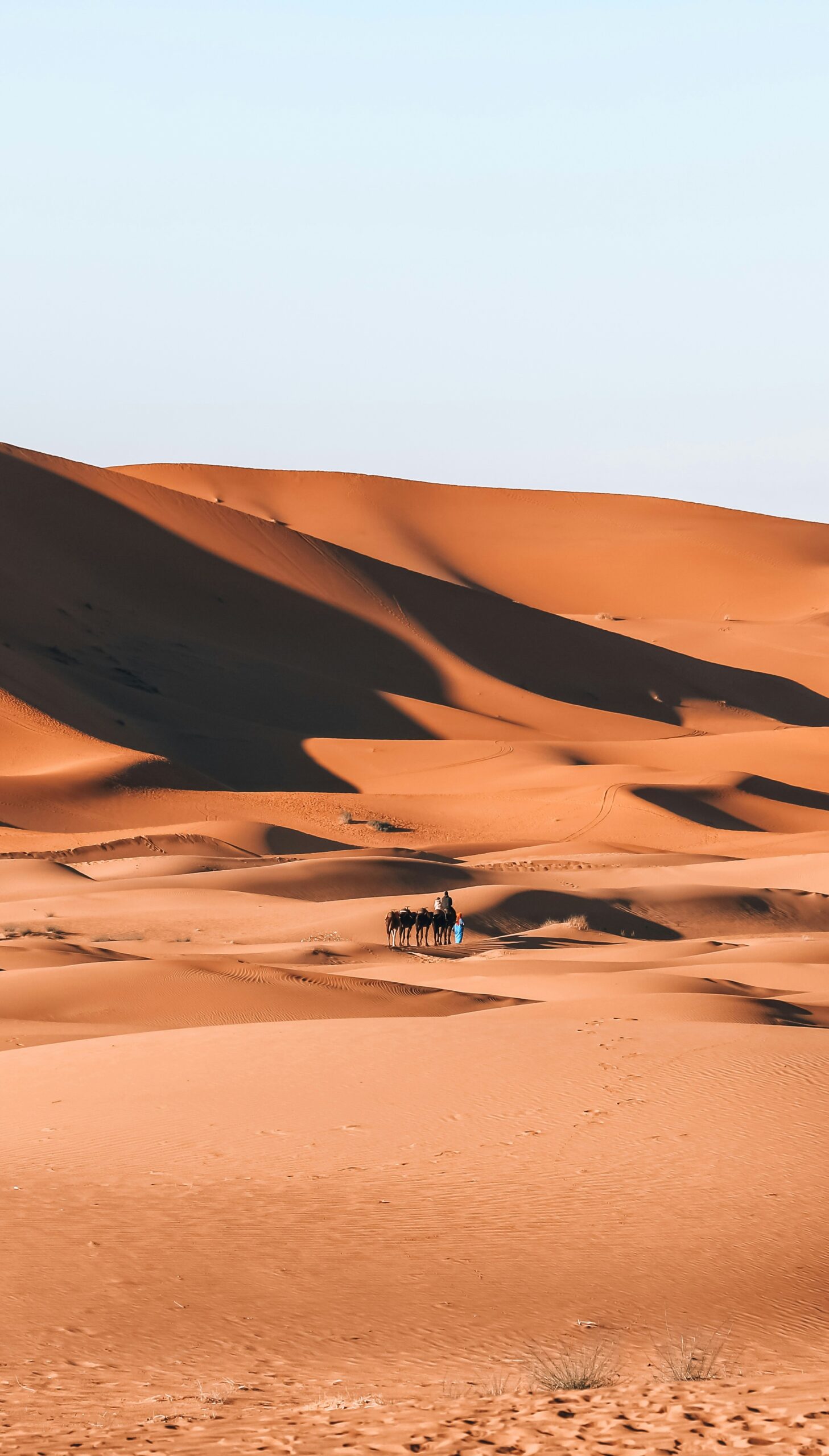
Merzouga is one of the most famous desert destinations in Morocco, located near the Algerian border in the southeast of the country. It is best known for the impressive Erg Chebbi dunes, some of the highest sand dunes in Morocco.
The golden dunes of Merzouga change color throughout the day, creating breathtaking views at sunrise and sunset. The silence and vast open space give visitors a deep sense of peace and connection to nature.
Life around Merzouga is closely linked to the desert environment. Local communities have adapted their traditions, architecture, and daily routines to survive in this unique landscape.
Camel trekking, desert camps, and nights under the stars allow travelers to experience the Sahara in an authentic way. The desert sky, filled with stars, is one of the most unforgettable sights in the region.
Merzouga Sahara represents the spirit of the Moroccan desert — calm, powerful, and timeless.
Traditional desert music and storytelling play an important role in Merzouga’s culture, especially among Amazigh and Gnawa communities. Evenings are often filled with drum rhythms and songs that reflect desert life and history.
The oasis areas near the dunes provide water and palm trees, creating small pockets of greenery in the middle of the sand. These oases have supported life for centuries and remain essential to local survival.
Merzouga is also known for its strong connection between humans and nature. The desert teaches patience, simplicity, and respect for the environment, values deeply rooted in local traditions.
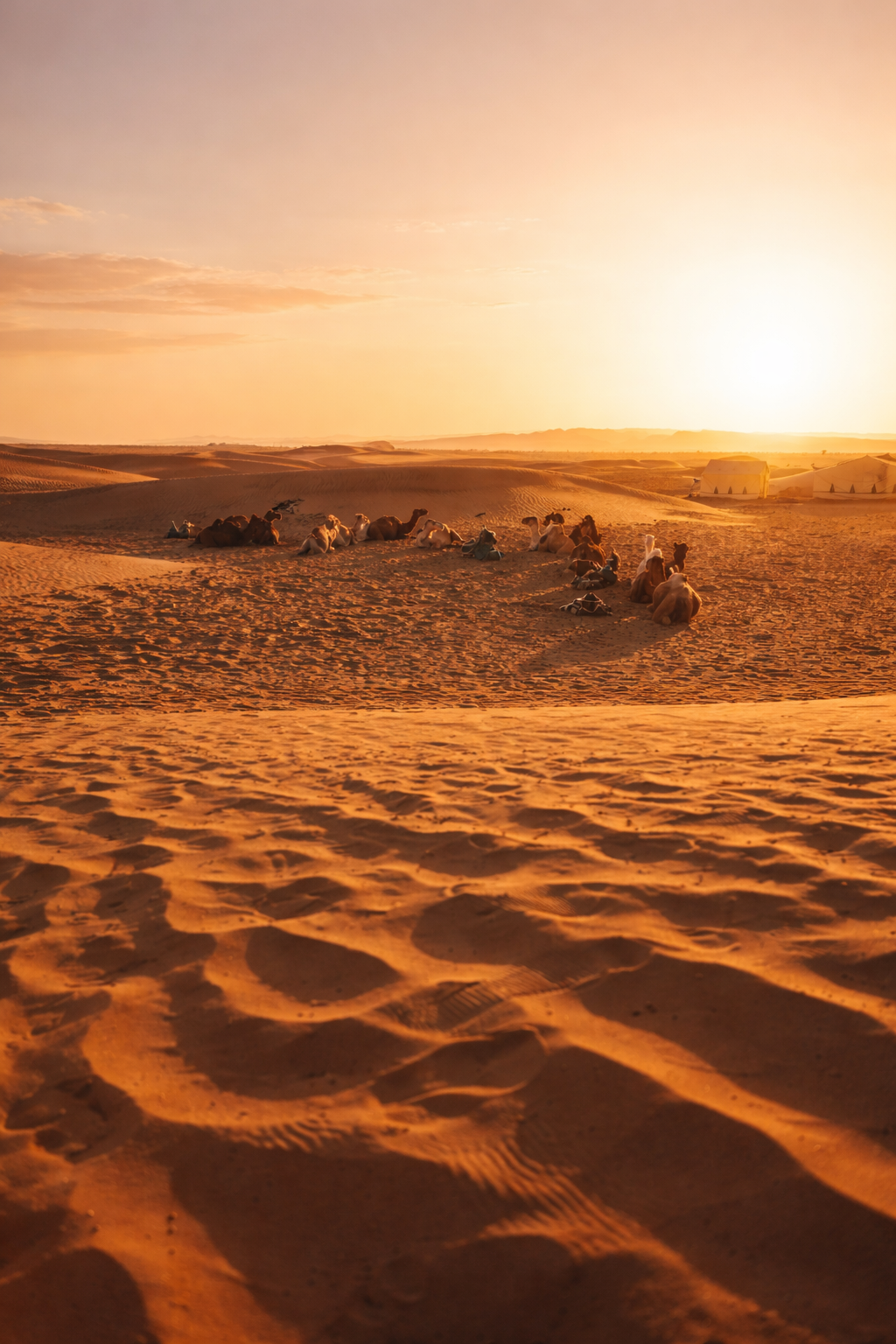
Zagora Desert is located in southeastern Morocco, at the edge of the Draa Valley, and is known as one of the historic gateways to the Sahara. For centuries, this region served as a starting point for ancient caravan routes crossing the desert.
Unlike the high dunes of Merzouga, the Zagora Desert features rocky landscapes, open plains, and smaller sand dunes. Its beauty lies in its vast horizons, warm colors, and peaceful atmosphere.
The nearby Draa Valley is lined with palm groves and traditional kasbahs, creating a striking contrast between desert and greenery. This environment reflects the strong relationship between water, land, and survival.
Life in the Zagora region follows the rhythm of the desert. Local communities depend on agriculture, oasis farming, and traditional knowledge passed down through generations.
Camel rides, desert walks, and sunset views allow visitors to experience the calm spirit of the Sahara. Nights bring silence, fresh air, and clear skies filled with stars.
Zagora Desert represents history, simplicity, and the timeless journey of desert life in southern Morocco.
The region also holds deep cultural value, shaped by centuries of trade and travel across the Sahara. Songs, stories, and traditions continue to preserve this heritage.
Oases and palm groves remain essential to life in Zagora, offering shade, water, and nourishment in the heart of the desert landscape.
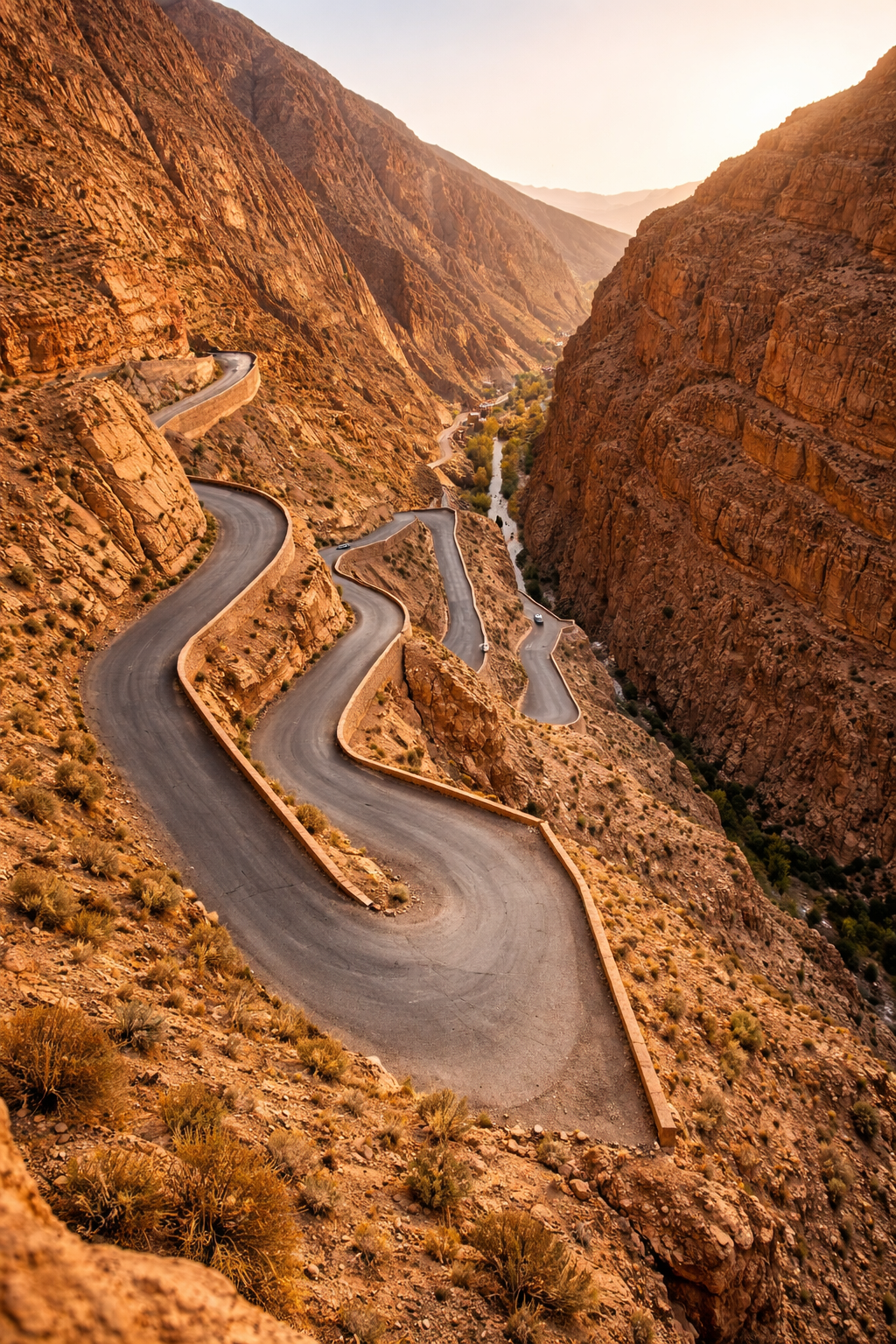
Dades Valley is one of Morocco’s most scenic natural regions, located between the High Atlas Mountains and the Sahara Desert. Known for its dramatic landscapes, the valley is shaped by rivers, cliffs, and winding mountain roads.
The valley is famous for its red rock formations, deep canyons, and panoramic viewpoints. As the sunlight changes throughout the day, the colors of the rocks shift, creating breathtaking scenery.
Along the valley, small villages and traditional kasbahs are built from earth and stone, blending naturally into the surrounding environment. Life here depends heavily on agriculture, especially in fertile areas near the river.
Terraced fields line the valley slopes, allowing local families to grow crops using traditional farming methods passed down through generations.
Rose gardens, almond trees, and cultivated fields bring life to the valley, particularly during spring when the region becomes colorful and vibrant.
Dades Valley reflects a strong connection between people and nature, where daily life follows the rhythm of the seasons and the flow of water.
The valley is also known for its scenic roads and viewpoints that attract travelers seeking peaceful landscapes and authentic rural life.
Dades Valley represents harmony between land, culture, and tradition, offering a calm and unforgettable experience in southern Morocco.
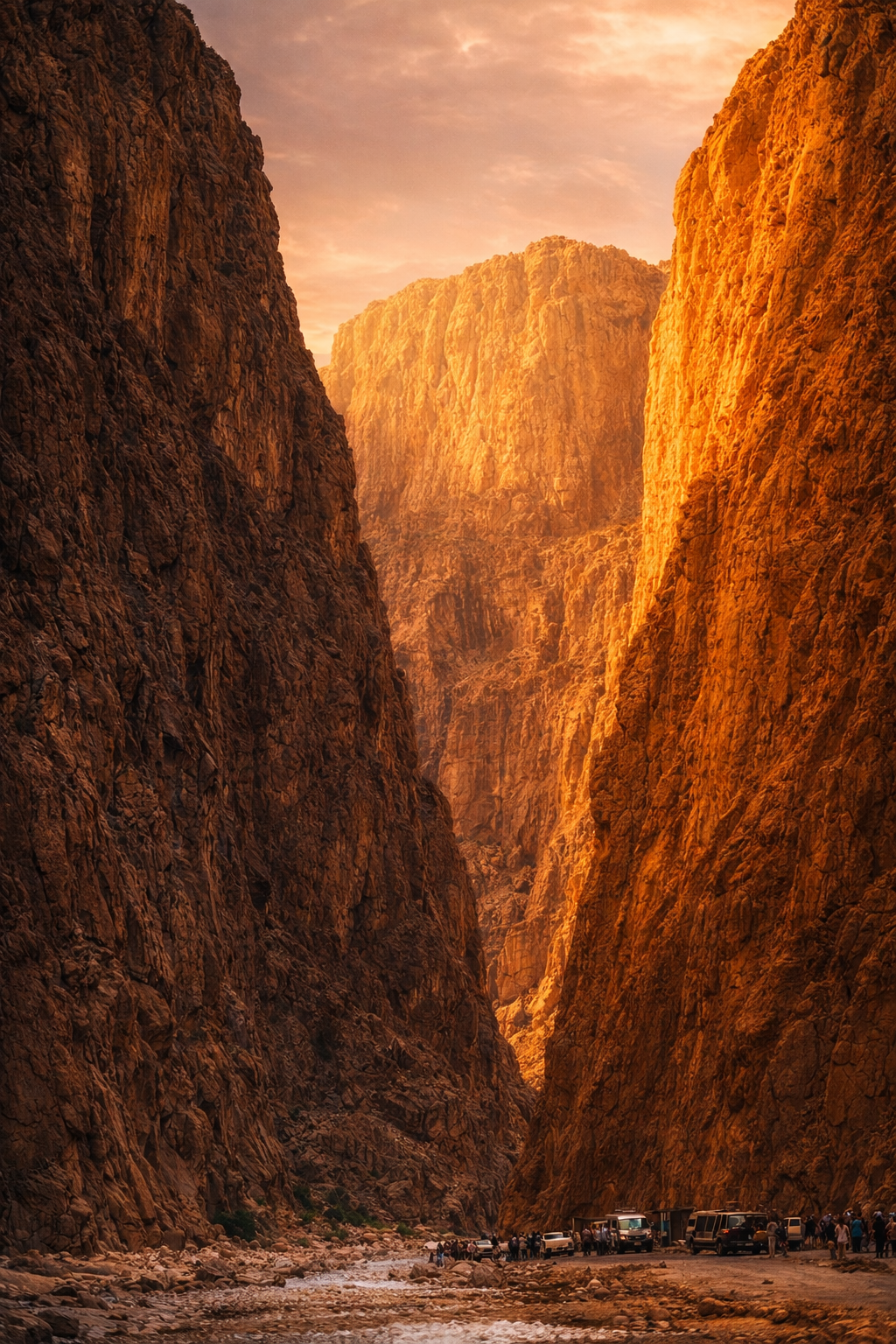
Todgha Gorges are among the most impressive natural formations in Morocco, located near the town of Tinghir in the eastern High Atlas region. The gorges were formed by the Todgha River cutting through massive limestone cliffs over thousands of years.
The canyon walls rise dramatically on both sides, reaching heights of several hundred meters. In some areas, the passage becomes very narrow, creating a powerful and breathtaking landscape.
Fresh water flows through the gorge, nourishing nearby palm groves and agricultural fields. This contrast between towering rock walls and green oasis makes the area especially striking.
Local villages are located close to the canyon, where life depends on agriculture and natural water sources. Traditional farming continues to shape daily life in the region.
Todgha Gorges attract hikers, climbers, and nature lovers who come to explore the canyon and enjoy its cool, refreshing atmosphere.
Walking through the gorge offers a sense of calm, with the sound of flowing water echoing between the cliffs.
The area also holds cultural importance, reflecting the strong relationship between people and their natural environment.
Todgha Gorges represent the strength of nature and the timeless beauty created by water and stone over centuries.
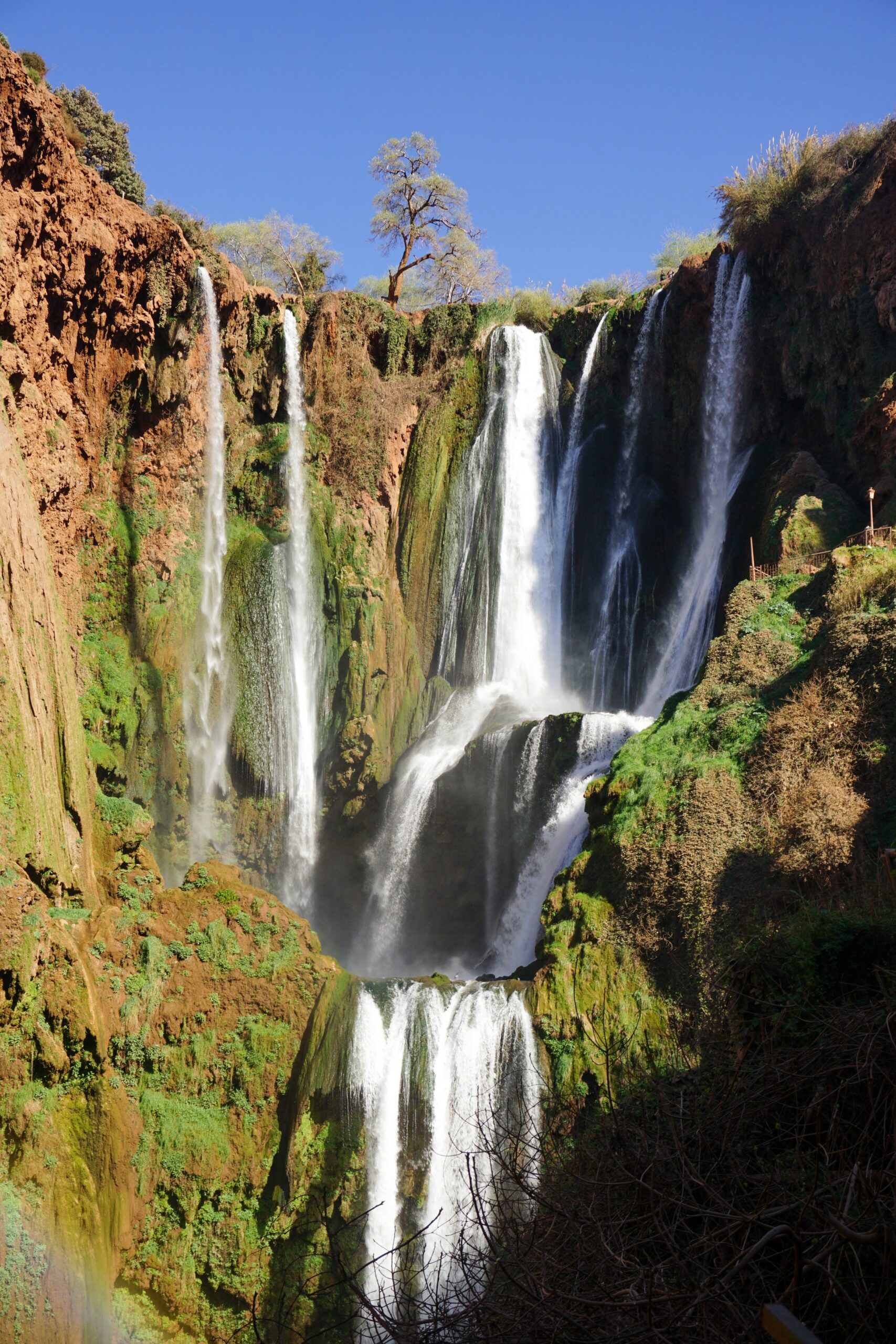
Ouzoud Waterfalls are the most famous and highest waterfalls in Morocco, located in the Middle Atlas region near the village of Ouzoud. They are surrounded by lush greenery and dramatic red cliffs.
The waterfalls cascade in several levels, creating powerful streams of water that flow into natural pools below. Mist rises from the falls, adding freshness and beauty to the landscape.
Olive trees, fig trees, and rich vegetation surround the area, making it one of the greenest natural sites in the country. The sound of flowing water creates a calm and relaxing atmosphere.
Visitors can walk along scenic paths, enjoy viewpoints, or take small boat rides near the base of the falls. The area is also home to friendly Barbary macaques living freely in the forest.
Ouzoud Waterfalls represent the refreshing and vibrant side of Morocco’s natural beauty, offering a peaceful escape into nature.
The area around the waterfalls is especially beautiful during spring, when the vegetation becomes greener and the water flow is at its strongest. The fresh air and natural surroundings create an ideal environment for relaxation.
Traditional cafés and viewpoints along the paths allow visitors to rest and enjoy panoramic views of the falls. These spaces reflect the simple rhythm of rural life shaped by nature.
Ouzoud Waterfalls continue to represent a meeting point between water, land, and community, offering an experience that combines natural beauty with local culture.
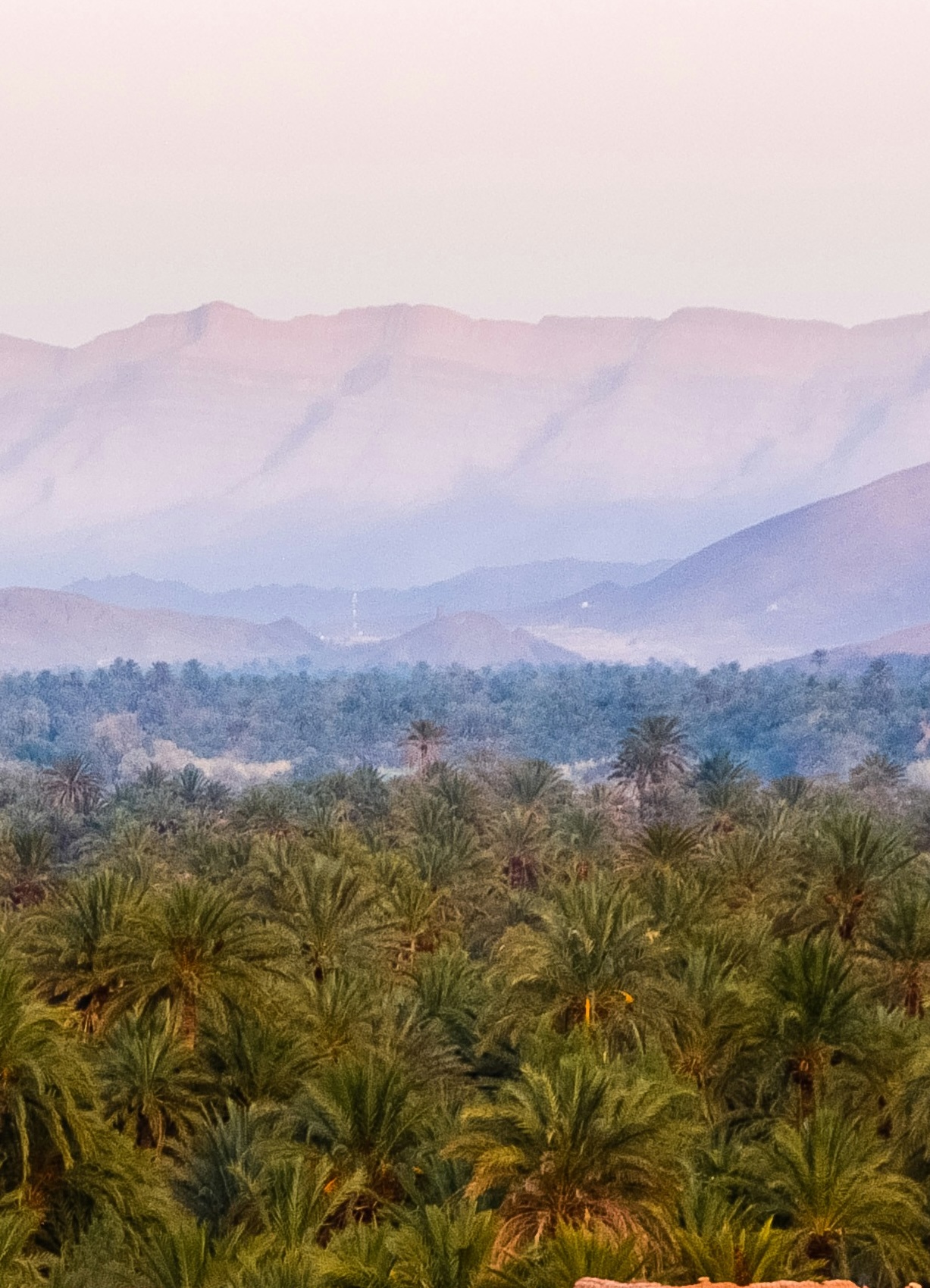
Tafilalet Oasis is one of the largest and most historic oasis regions in Morocco, located in the southeast near the Sahara Desert. It has long served as an important center of trade and settlement in desert history.
The oasis is formed by vast palm groves fed by underground water and seasonal rivers. Thousands of date palms stretch across the landscape, creating a green contrast against the surrounding desert.
For centuries, local communities have depended on the oasis for agriculture, water management, and daily life. Traditional irrigation systems allowed people to cultivate crops despite the harsh desert climate.
Farming within the oasis includes dates, vegetables, and grains, supporting families and maintaining food security in the region.
Tafilalet is also known as the birthplace of Morocco’s ruling dynasty, giving the area strong historical and political significance.
Ancient ksars and kasbahs remain scattered across the landscape, reflecting centuries of desert architecture and settlement.
Life in the oasis follows the rhythm of water and seasons, shaping traditions, customs, and daily routines.
Tafilalet Oasis represents life, resilience, and continuity in the heart of the desert, showing how nature and human ingenuity come together to sustain civilization.
Morocco’s desert and natural landscapes reveal a powerful connection between land and life. From golden dunes and deep valleys to waterfalls and oases, each place tells a story shaped by time, water, and human resilience.
Together, these natural wonders reflect the diversity and beauty of Morocco, offering moments of peace, adventure, and deep appreciation for nature’s balance.
Discover More About Morocco
Morocco’s desert and natural scenery are only one part of the country’s rich identity. Continue your journey to explore the cities, culture, traditions, and daily life that make Morocco truly unique.