
Moroccan culture is a rich blend shaped by centuries of history, geography, and diverse influences. Amazigh, Arab, Andalusian, African, and Mediterranean elements have come together to form a unique cultural identity.
Traditions play an essential role in daily life, guiding social values, family relationships, and community bonds. Respect, hospitality, and togetherness remain at the heart of Moroccan society.
Cultural expressions appear in clothing, music, architecture, celebrations, and daily customs. These traditions are not only preserved but actively practiced across generations.
From rural villages to vibrant cities, Moroccan culture continues to evolve while remaining deeply connected to its roots.
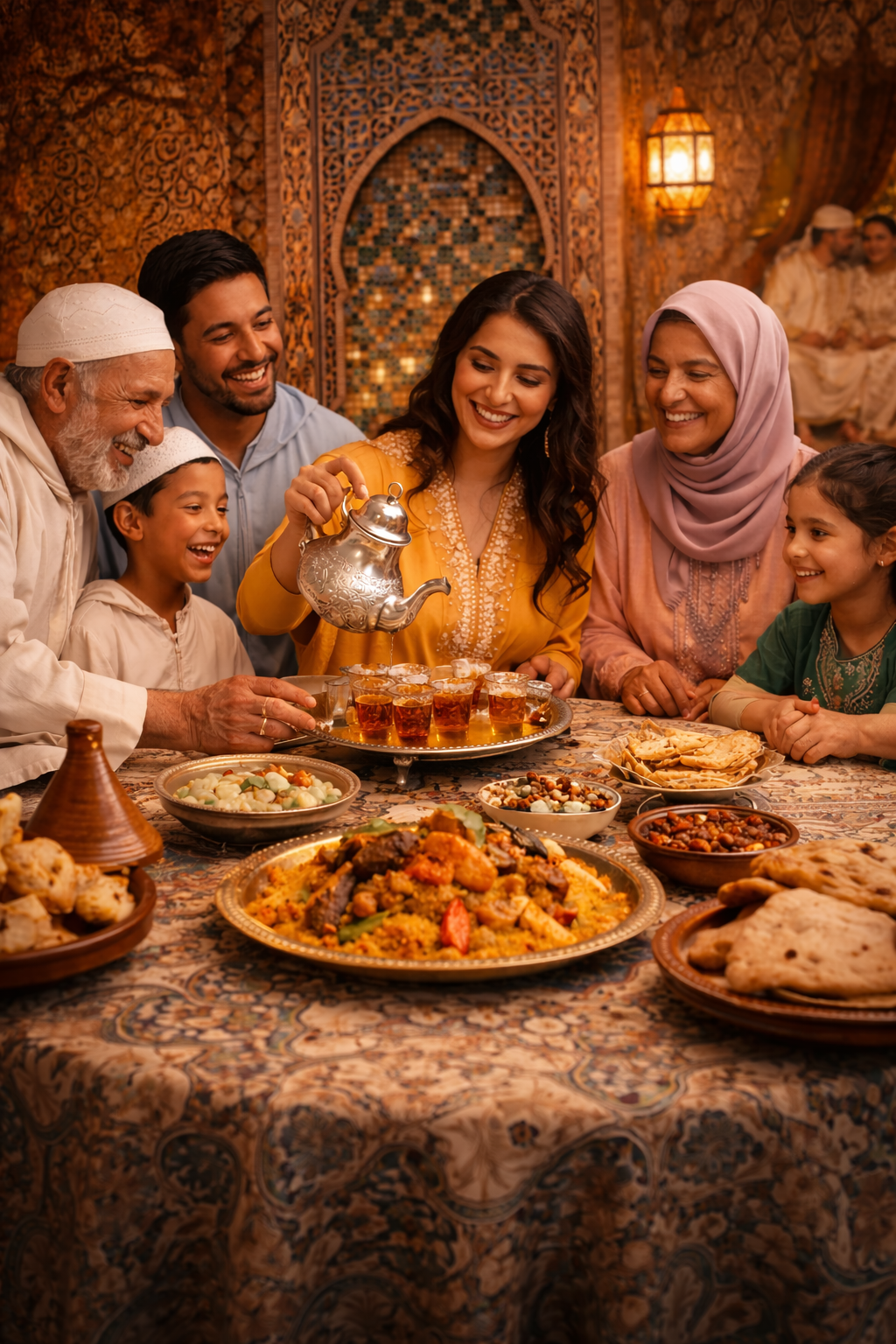
Family is the foundation of Moroccan life. Strong relationships between parents, children, and extended family members shape social structure and responsibilities.
Gatherings are frequent and meaningful, especially during meals, celebrations, and religious events. Sharing food, tea, and conversation strengthens community ties.
Hospitality is considered a moral value. Guests are welcomed warmly, often with mint tea and homemade dishes, reflecting generosity and respect.
In Moroccan society, elders are highly respected and their advice is valued in family and community decisions. Wisdom, patience, and experience play an important role in maintaining harmony.
Daily life is often shaped by shared routines, such as morning markets, afternoon tea, and evening gatherings. These moments strengthen social bonds and create a sense of belonging.
Community solidarity remains strong, especially in times of celebration or difficulty. Neighbors support one another through cooperation, kindness, and mutual respect, reinforcing the importance of unity in Moroccan culture.
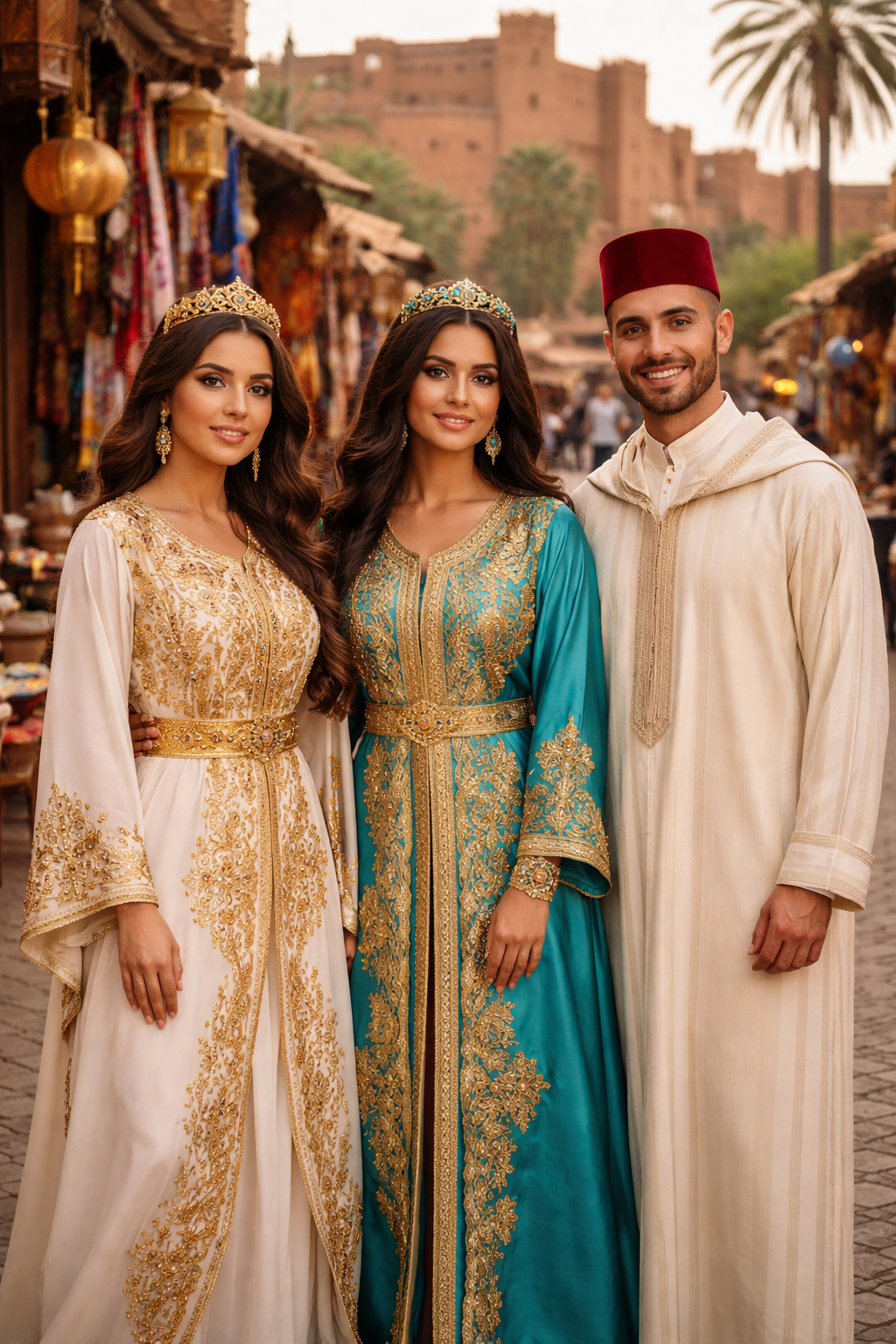
Traditional Moroccan clothing reflects the country’s identity, history, and regional diversity. Each garment is designed not only for beauty but also for comfort and cultural expression.
The djellaba is one of the most common traditional outfits, worn by both men and women in daily life. Made from wool or cotton, it protects from cold winters and hot summers.
For special occasions, Moroccans wear elegant garments such as the kaftan and takchita, often decorated with embroidery, silk, and fine details. These outfits are especially popular during weddings and celebrations.
Traditional clothing varies by region, with different colors, patterns, and fabrics reflecting local heritage. Through these garments, Moroccan culture continues to express pride, elegance, and tradition passed down through generations.
Traditional clothing is often handmade by skilled artisans who specialize in tailoring, embroidery, and decorative stitching. These crafts require patience and precision, with some garments taking weeks to complete.
Colors and fabrics are carefully chosen depending on the region and occasion. Lighter materials are worn in warmer areas, while heavier fabrics are preferred in colder regions.
Even today, traditional clothing remains an important part of Moroccan identity. It is worn with pride during festivals, family gatherings, and important ceremonies, preserving a strong connection between modern life and cultural heritage.
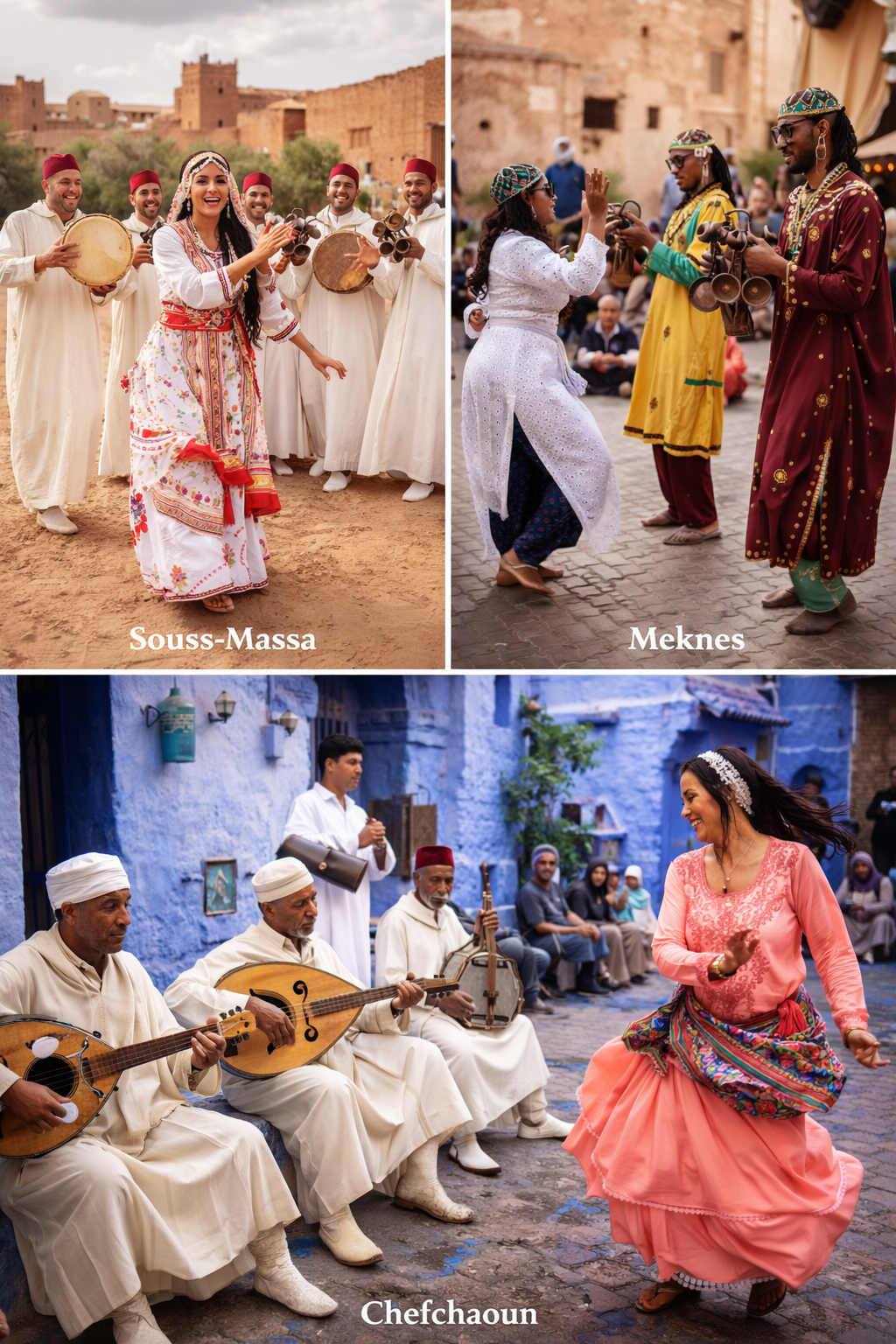
Moroccan music and dance reflect the country’s rich cultural diversity and long history. Influenced by Amazigh, Arab, African, Andalusian, and Saharan traditions, Moroccan music expresses emotion, identity, and community spirit.
Each region has its own musical style, instruments, and rhythms. From slow spiritual melodies to energetic celebrations, music plays an important role in daily life and special occasions.
Traditional instruments such as the bendir, gnawa qraqeb, oud, and rebab create powerful sounds that bring people together. Music is often accompanied by rhythmic clapping and expressive movement.
Dance in Morocco is closely connected to celebration. It appears during weddings, festivals, and cultural gatherings, where men and women perform traditional movements that reflect joy, unity, and heritage.
Moroccan music and dance are not only forms of entertainment but living traditions passed from generation to generation, keeping cultural identity alive through rhythm and movement.
Morocco’s desert and natural landscapes reveal a powerful connection between land and life. From golden dunes and deep valleys to waterfalls and oases, each place tells a story shaped by time, water, and human resilience.
Together, these natural wonders reflect the diversity and beauty of Morocco, offering moments of peace, adventure, and deep appreciation for nature’s balance.
Discover More About Morocco
Traditional clothing reflects only one part of Morocco’s cultural identity. Continue your journey to explore the country’s customs, celebrations, lifestyle, and everyday traditions that shape Moroccan life.