
From the blue streets of Chefchaouen to the timeless medinas of Fes and Marrakech, Morocco’s cities offer unforgettable experiences. Each destination highlights a different side of the country — history, cuisine, art, nature, and daily life.
Whether you’re exploring ancient walls, enjoying traditional food, or walking through modern neighborhoods, every city reveals a unique atmosphere shaped by its people and traditions.
Browse the cities below to learn more about their culture, landmarks, and what makes each place special.
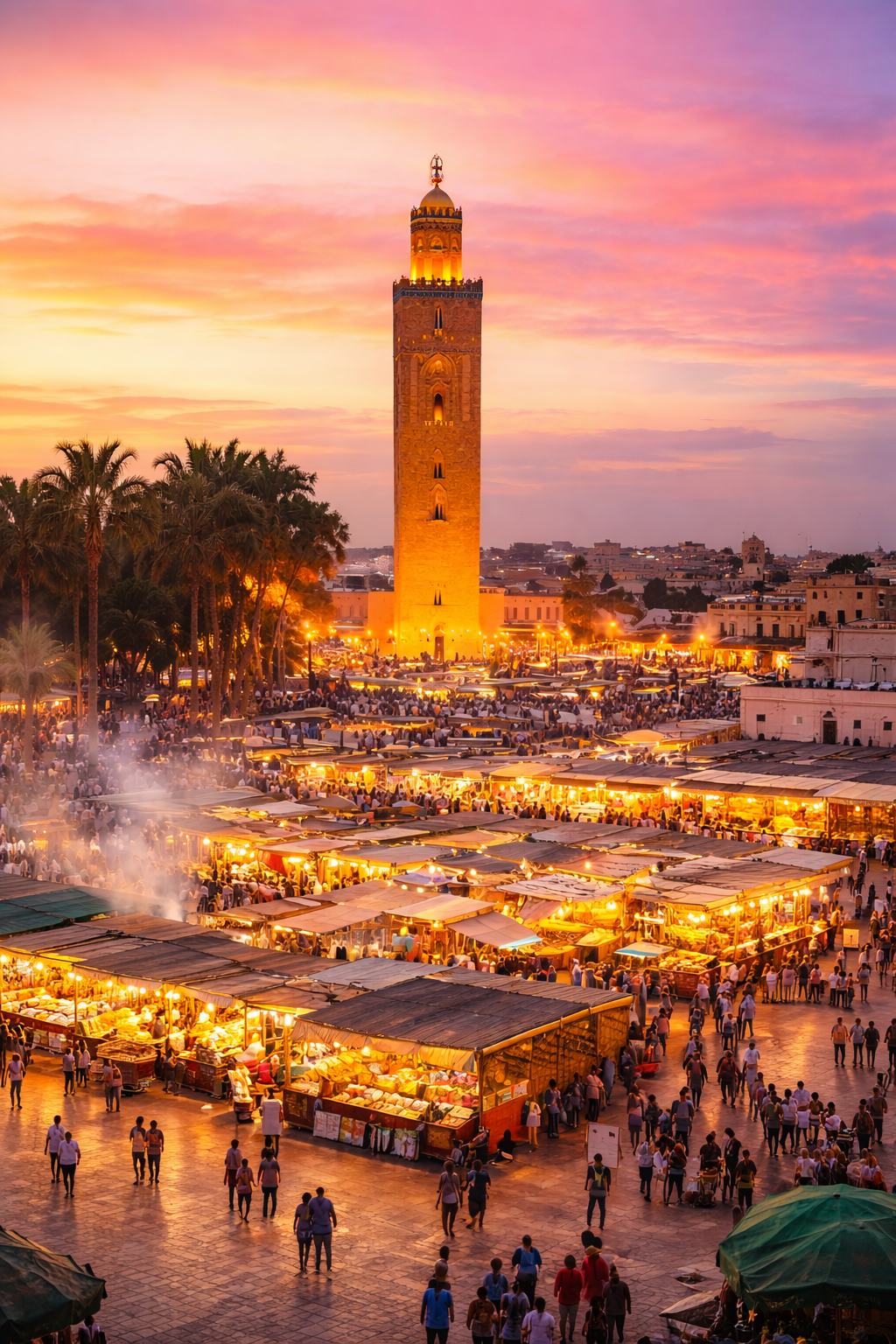
Marrakech reflects the heart of Moroccan culture, history, and daily life. The city combines ancient traditions with vibrant energy, creating an atmosphere full of color, movement, and expression.
Known as the Red City, Marrakech is famous for its historic walls, traditional architecture, and lively streets. Its old medina remains one of the most active areas, where locals and visitors meet among shops, artisans, and markets.
Jemaa el-Fnaa is the soul of the city, especially in the evening. The square fills with performers, musicians, food vendors, and storytellers, offering a unique cultural experience found nowhere else in Morocco.
Marrakech is also rich in historical landmarks, including palaces, mosques, and traditional riads decorated with tiles and carved wood. These places reflect centuries of craftsmanship and artistic heritage.
The city is home to beautiful gardens that offer calm and balance amid the busy streets. Places like Majorelle Garden show another side of Marrakech — peaceful, colorful, and inspiring.
Different neighborhoods reveal different lifestyles, from the historic medina to the modern district of Gueliz. This contrast shows how Marrakech continues to grow while preserving its identity.
Today, Marrakech remains one of Morocco’s most important cities. It represents tradition, hospitality, and cultural pride, connecting the past with modern life in a powerful and unforgettable way.
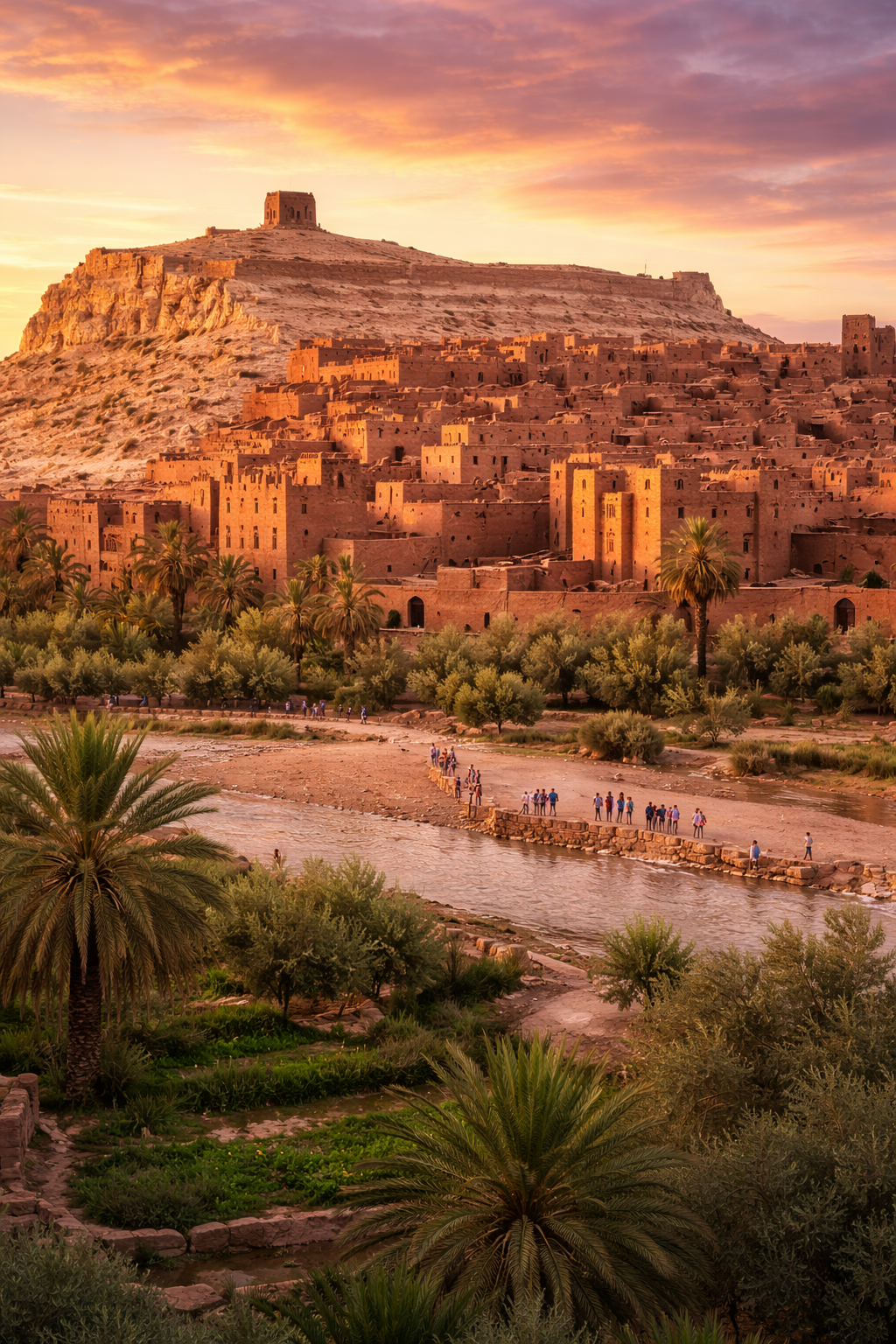
Ouarzazate reflects the spirit of southern Morocco, shaped by desert landscapes, ancient architecture, and deep cultural roots. The city represents a strong connection between history, tradition, and the natural environment.
Often known as the “Gateway to the Desert,” Ouarzazate has long been an important stop for travelers and traders crossing the Sahara. Its location made it a center of culture and exchange.
One of the most famous landmarks near the city is Kasbah Ait Ben Haddou, a UNESCO World Heritage Site. Built from clay and earth, this historic village showcases traditional Moroccan architecture passed down through generations.
Kasbah Ait Ben Haddou has appeared in many international films, attracting visitors from all over the world. Walking through its narrow paths offers a powerful look into Morocco’s past.
Ouarzazate is also known for its cinema studios, which have hosted the production of many global movies and series. These studios highlight the city’s important role in the film industry.
Surrounded by mountains, valleys, and desert scenery, Ouarzazate offers breathtaking views and a peaceful atmosphere. The natural surroundings add to the city’s unique charm.
Today, Ouarzazate stands as a symbol of heritage, cinema, and desert culture. It continues to preserve its traditions while welcoming visitors seeking history, beauty, and authenticity.
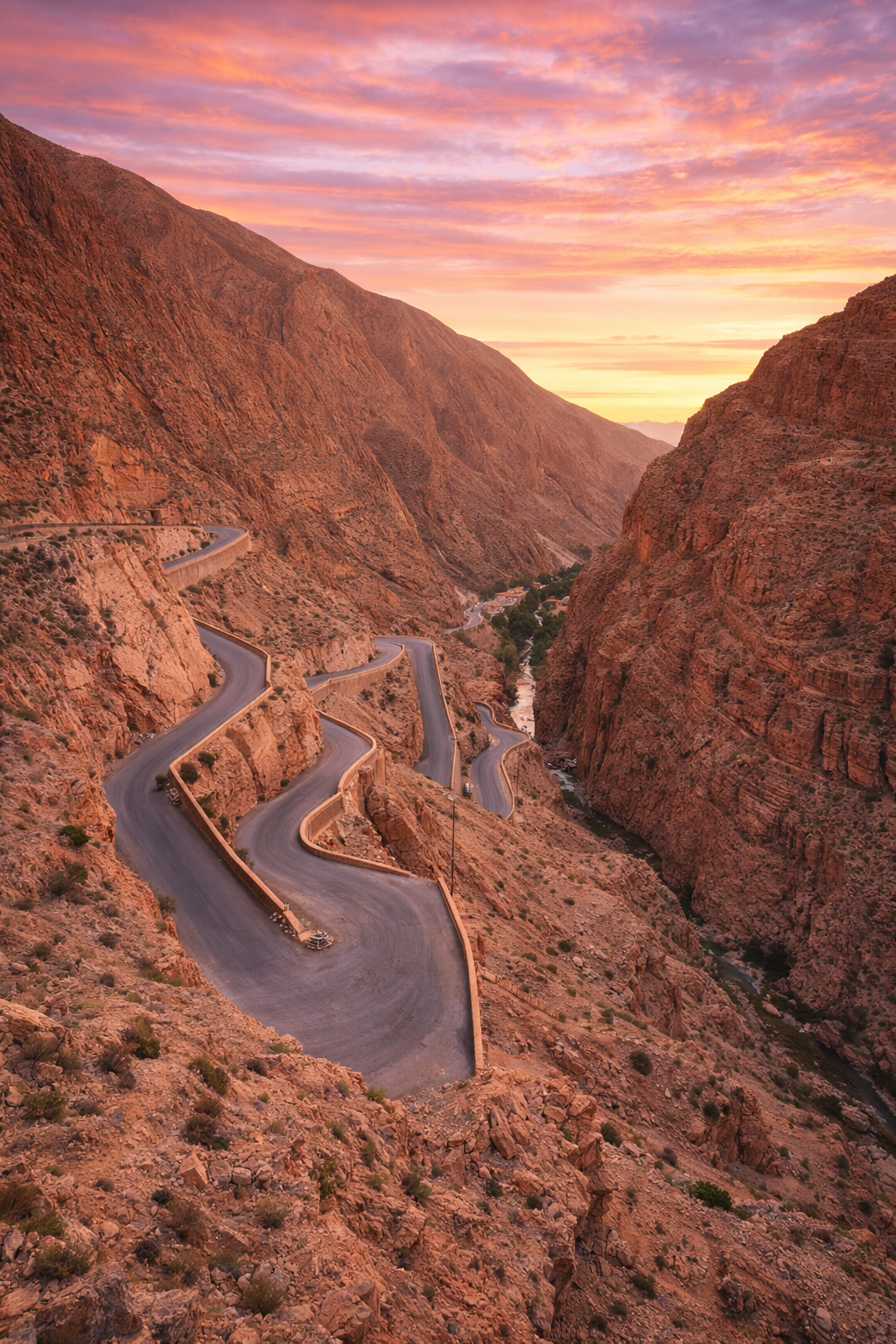
Boumalne Dades is a peaceful town located in southern Morocco, known for its dramatic landscapes and strong connection to nature. The area reflects traditional life shaped by mountains, valleys, and river oases.
Situated between the High Atlas Mountains and the desert, Boumalne Dades serves as an important stop for travelers exploring the south. Its location has made it a gateway to some of Morocco’s most beautiful natural regions.
The town is famous for the Dades Valley, where red rock formations, green fields, and palm trees create stunning scenery. The valley is carved by the Dades River, which brings life to the surrounding land.
Traditional villages built from clay and stone line the valley, blending naturally with the mountains. These villages reflect ancestral architecture and a simple way of life passed down through generations.
Boumalne Dades is also known for its winding mountain roads and panoramic viewpoints. These routes offer unforgettable views and attract photographers and nature lovers from around the world.
Local culture remains strong in the region, with agriculture playing an important role in daily life. Farming, seasonal harvests, and community traditions continue to shape the identity of the area.
Today, Boumalne Dades represents calm, authenticity, and natural beauty. It offers visitors a chance to experience Morocco’s landscapes, heritage, and peaceful rhythm of life.
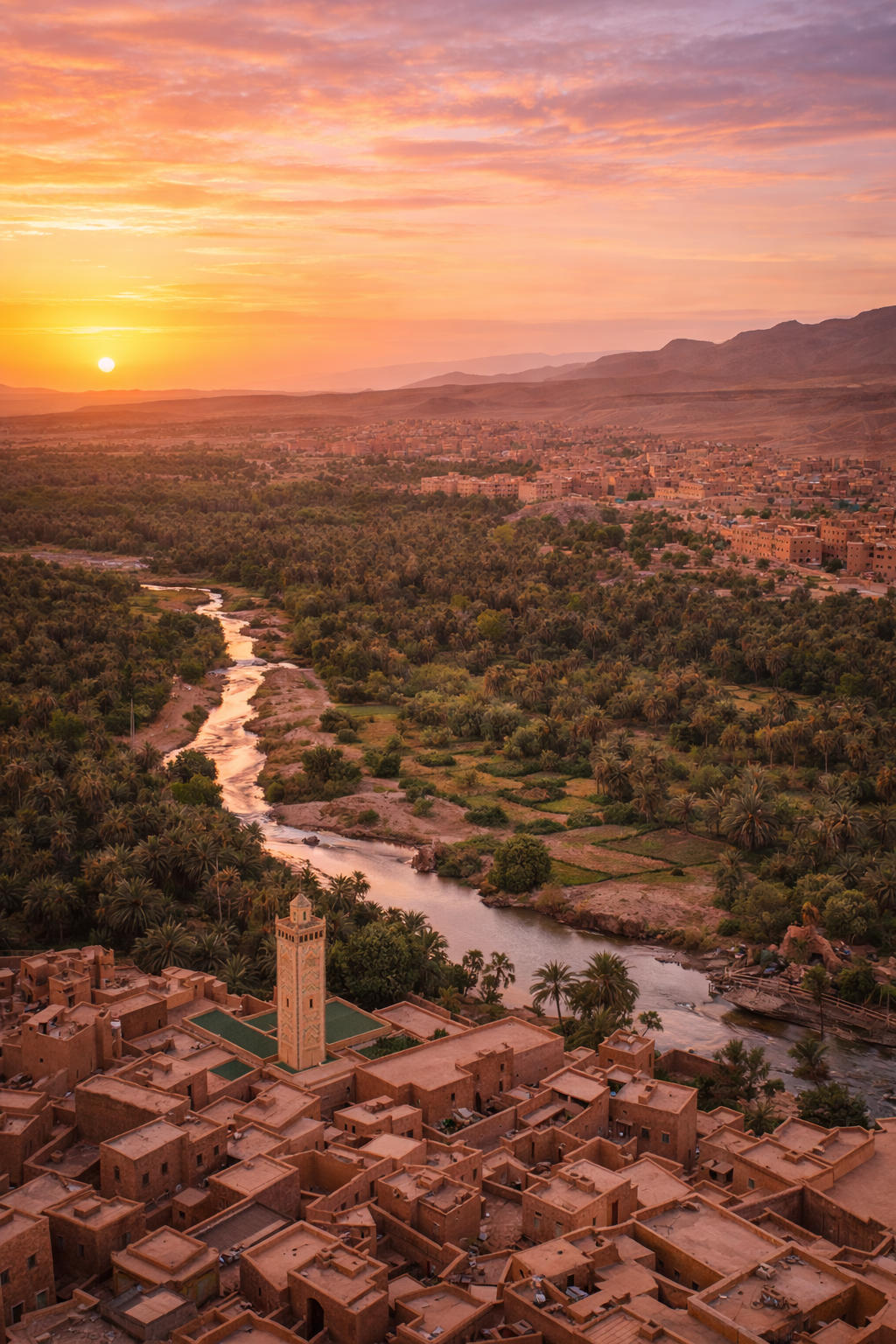
Tafilalet is one of the most historic regions in southeastern Morocco, known for its desert oases and deep cultural heritage. The area represents an important chapter in Morocco’s history and traditional way of life.
For centuries, Tafilalet served as a major crossroads for trans-Saharan trade routes. Caravans carrying goods, culture, and knowledge passed through this region, making it a center of exchange and prosperity.
The region is closely connected to the origin of the Alaouite dynasty, which continues to rule Morocco today. This historical importance gives Tafilalet a special place in the country’s national identity.
Tafilalet is famous for its vast palm groves, especially around Erfoud and Rissani. These oases provide shade, agriculture, and life in an otherwise harsh desert environment.
Traditional ksour and kasbahs built from earth and clay are spread across the region. These structures reflect ancient architectural techniques adapted to the climate and landscape.
Local life in Tafilalet remains closely tied to agriculture, date farming, and seasonal traditions. Festivals celebrating harvests and heritage continue to preserve local customs.
Today, Tafilalet stands as a symbol of history, resilience, and desert culture. It connects Morocco’s royal past with the timeless beauty of its southeastern landscapes.
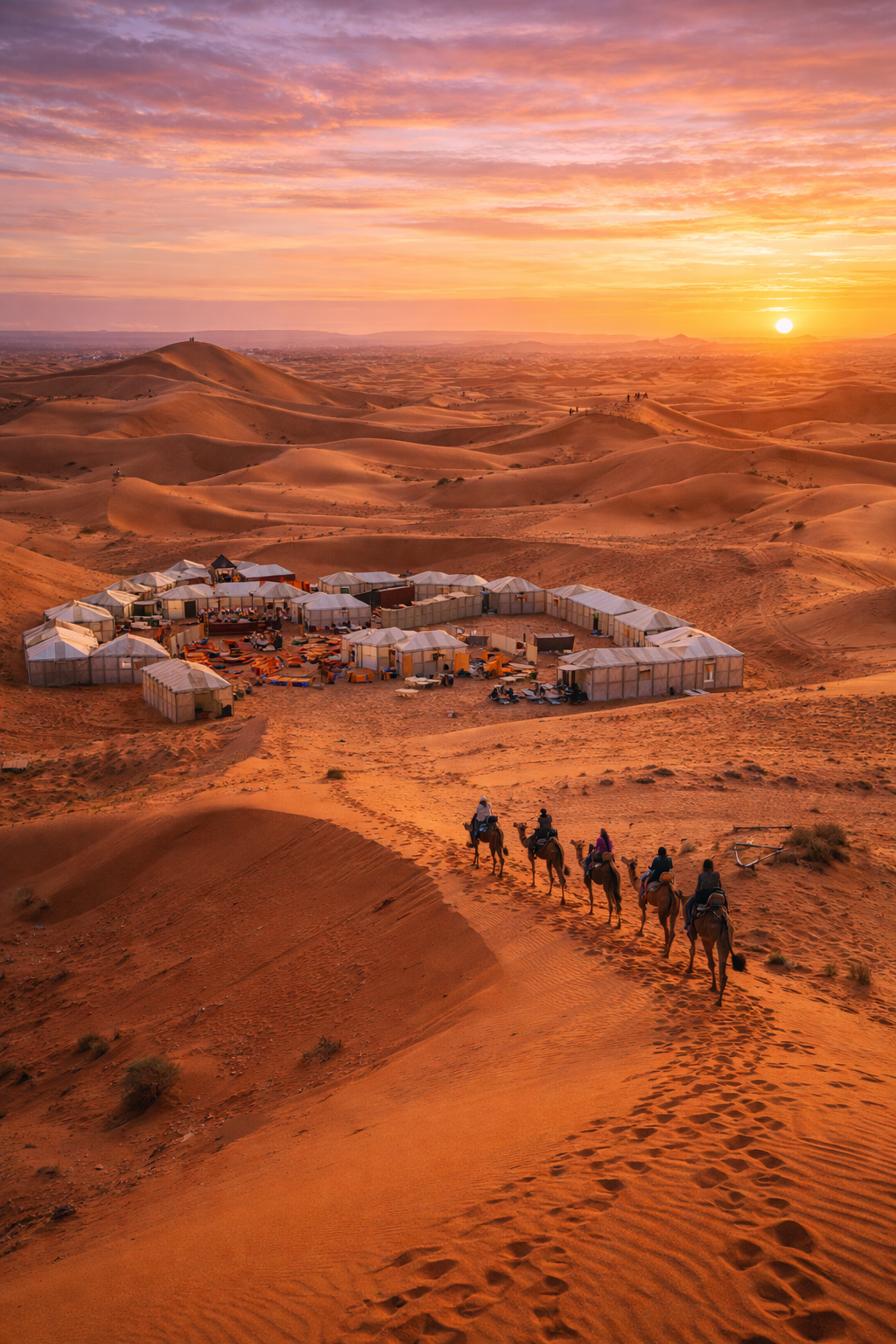
Merzouga is a small desert village located in southeastern Morocco, famous for its golden sand dunes and peaceful atmosphere. The area reflects the beauty and silence of the Sahara Desert.
The village lies at the edge of the Erg Chebbi dunes, some of the highest sand dunes in Morocco. These vast dunes change color throughout the day, creating breathtaking views at sunrise and sunset.
Merzouga is well known for desert experiences such as camel trekking and overnight stays in traditional camps. These activities allow visitors to discover desert life and its unique rhythm.
The region is also home to nomadic culture, where traditions, music, and hospitality remain strong. Local communities continue to preserve their way of life passed down through generations.
Despite the harsh environment, life thrives around desert oases and seasonal water sources. These areas support agriculture and small villages near the dunes.
Merzouga offers a rare sense of calm and connection with nature. The silence of the desert creates a powerful and unforgettable experience.
Today, Merzouga stands as one of Morocco’s most iconic desert destinations. It represents adventure, tradition, and the timeless spirit of the Sahara.
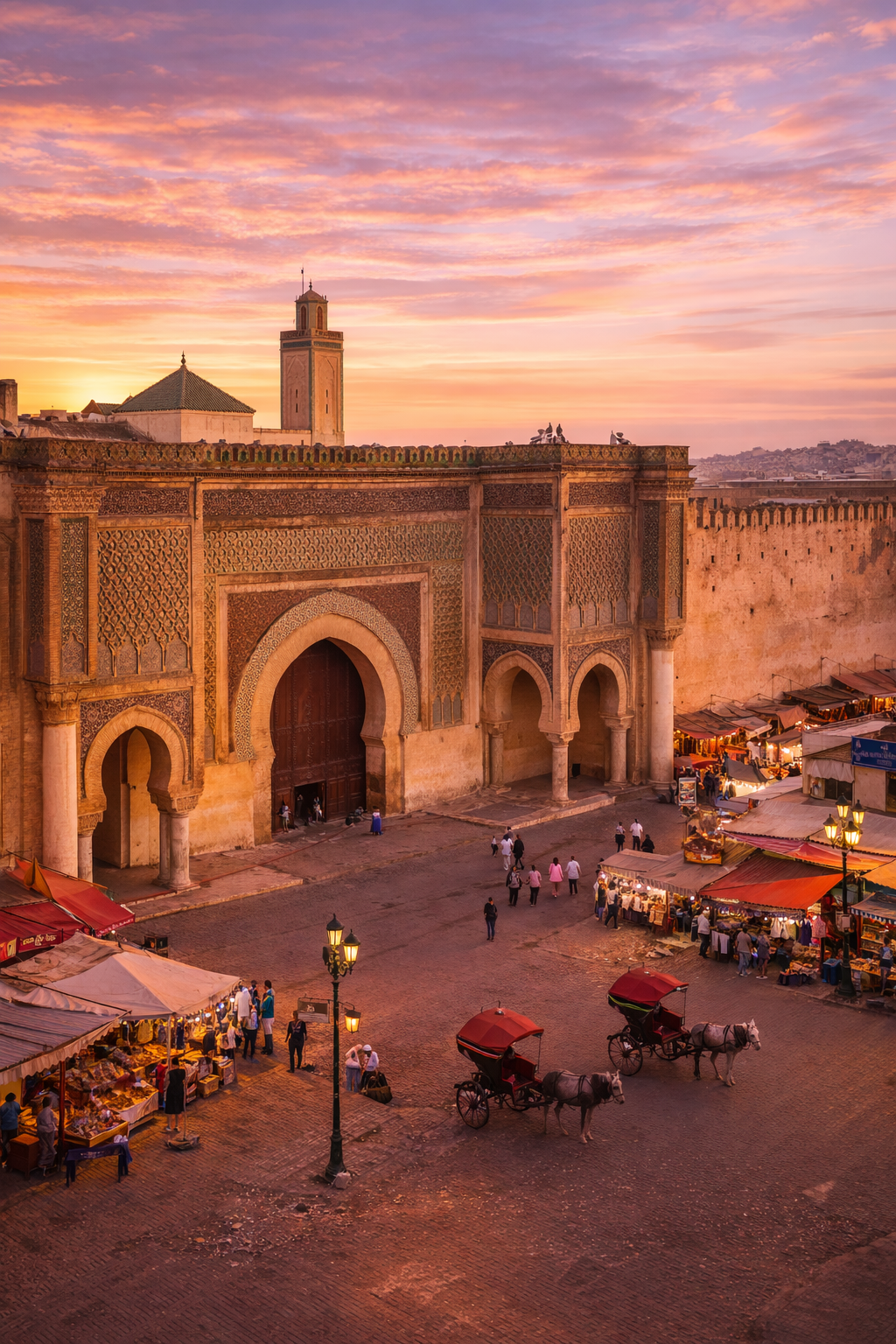
Meknes is one of Morocco’s historic imperial cities, known for its strong heritage and impressive architecture. The city reflects a powerful past shaped by kings, tradition, and craftsmanship.
Founded as an imperial capital under Sultan Moulay Ismail, Meknes became a center of political and military power. Many of its monuments were built to show strength, order, and grandeur.
The city is famous for its massive gates, especially Bab Mansour, considered one of the most beautiful gates in Morocco. These structures highlight detailed Moroccan design and skilled craftsmanship.
Meknes is home to a well-preserved medina where narrow streets, markets, and traditional workshops continue daily life. The medina reflects centuries of culture and community.
Surrounding the city are stables, granaries, and royal buildings that reveal the scale of its historical importance. These sites offer insight into Morocco’s imperial history.
Meknes is also located near important archaeological ruins such as Volubilis, adding to its cultural value. This connection links ancient Roman history with Moroccan heritage.
Today, Meknes represents dignity, history, and tradition. It remains a quiet yet powerful imperial city that preserves Morocco’s past while welcoming visitors from around the world.
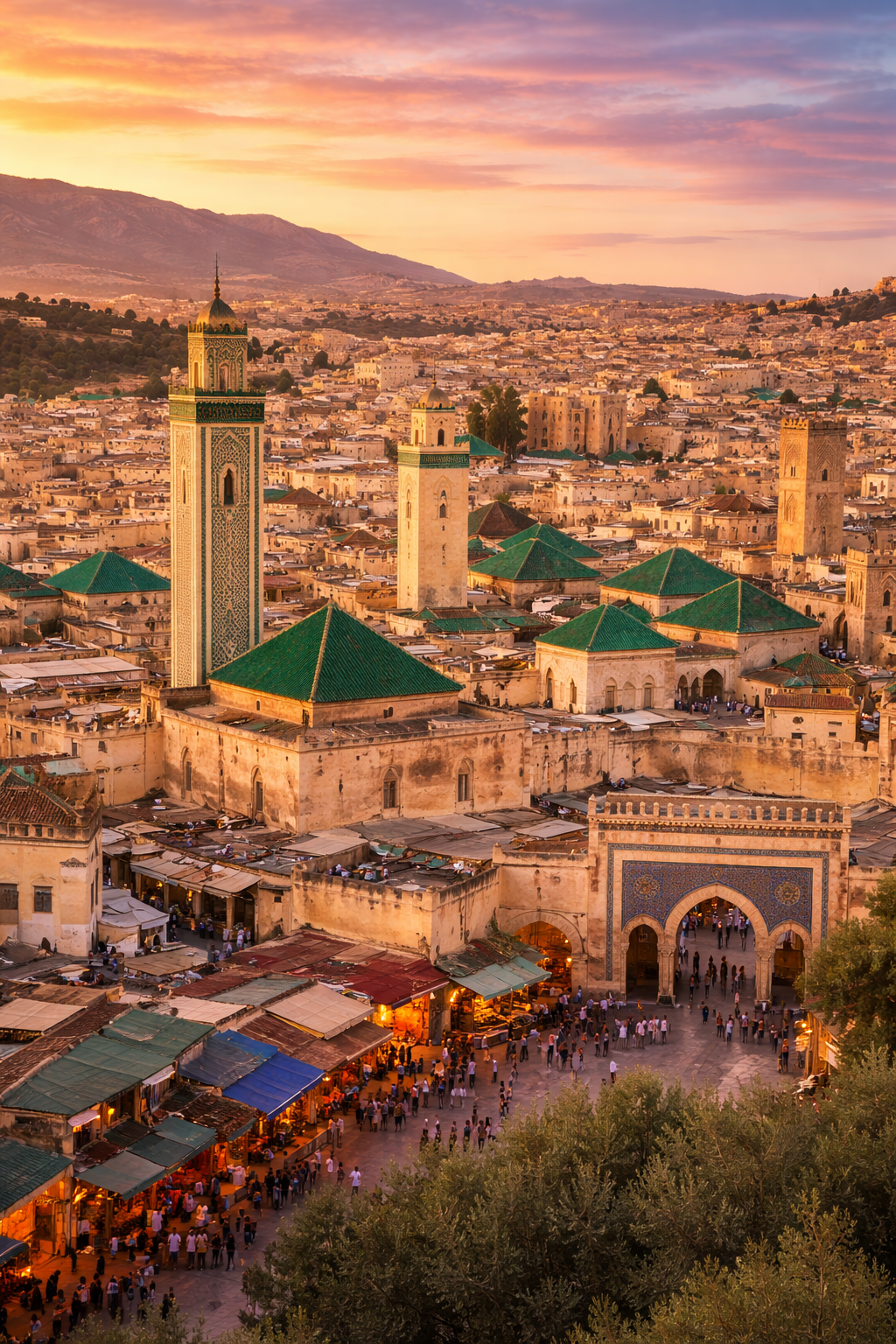
Fez is one of Morocco’s oldest and most important cities, known for its deep history and strong cultural heritage. The city represents the spiritual and intellectual heart of the country.
Founded in the 9th century, Fez became a major center of learning, religion, and craftsmanship. Its influence shaped Moroccan culture for centuries.
The city is famous for its ancient medina, Fez el-Bali, one of the largest car-free urban areas in the world. Its narrow streets are filled with markets, workshops, and traditional life.
Fez is home to Al Quaraouiyine University, recognized as one of the oldest universities in the world. This institution highlights the city’s long tradition of education and knowledge.
Traditional crafts such as leather tanning, pottery, and metalwork continue to thrive in Fez. These skills are passed down through generations and remain part of daily life.
Historic madrasas, mosques, and fountains display beautiful Moroccan architecture and detailed decoration. Each structure reflects spiritual and artistic excellence.
Today, Fez stands as a symbol of authenticity, knowledge, and tradition. It preserves Morocco’s cultural soul while welcoming visitors seeking history and meaning.
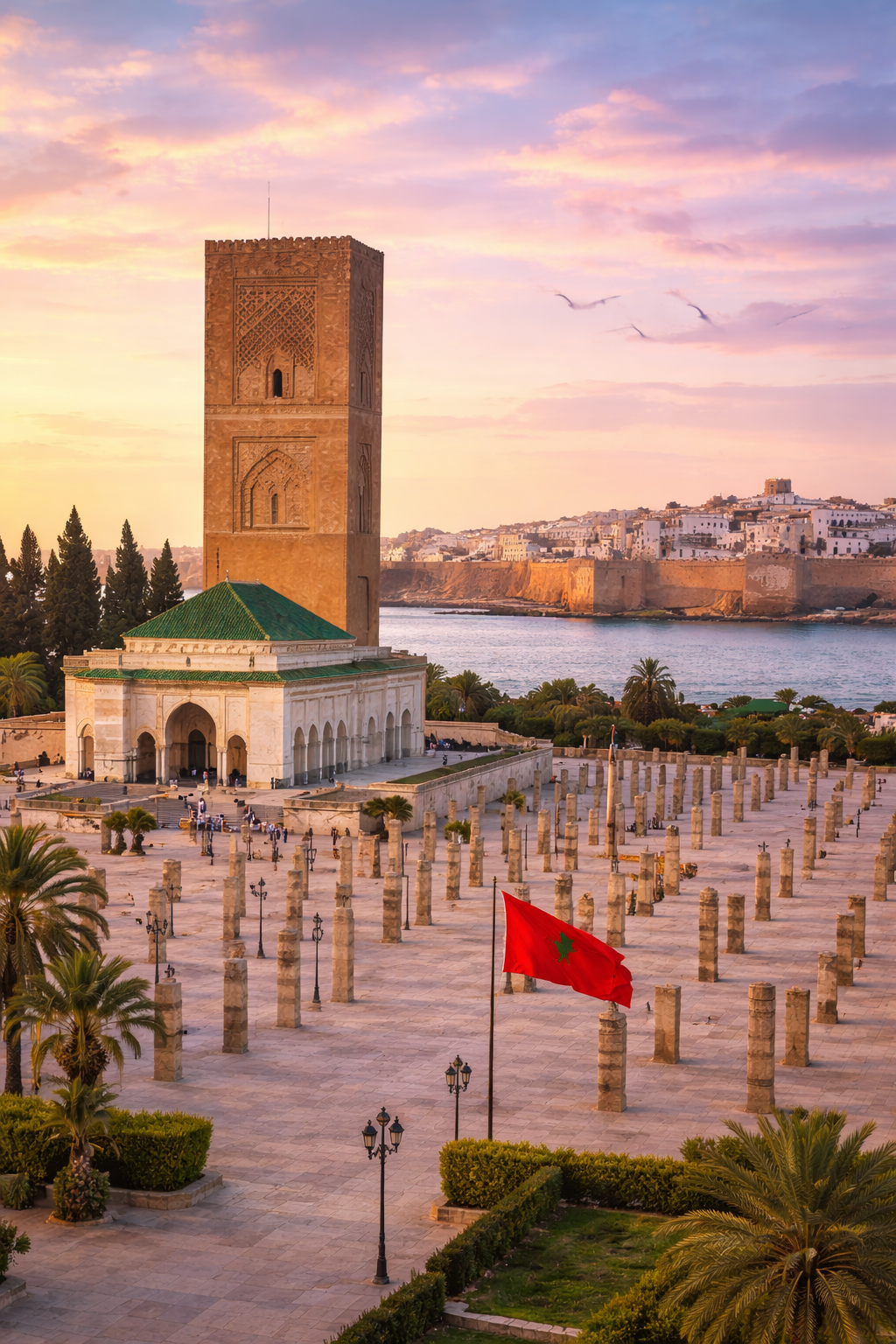
Rabat is the capital city of Morocco, known for its calm atmosphere and balanced way of life. The city reflects a blend of history, culture, and modern governance.
Founded in the 12th century, Rabat played an important role as a military and political center. Its historical roots remain visible throughout the city.
One of Rabat’s most famous landmarks is the Hassan Tower, standing as a symbol of the city’s rich past. Nearby, the Mausoleum of Mohammed V represents national pride and unity.
The Kasbah of the Udayas offers stunning views over the Atlantic Ocean. Its blue-and-white streets reflect Andalusian influence and traditional Moroccan design.
Rabat also features modern districts, wide avenues, and well-organized neighborhoods. This structure gives the city a peaceful and orderly character.
Cultural institutions, museums, and galleries contribute to Rabat’s artistic life. These spaces help preserve heritage while encouraging creativity.
Today, Rabat represents stability, elegance, and national identity. It connects Morocco’s historical legacy with its modern future in a unique and dignified way.
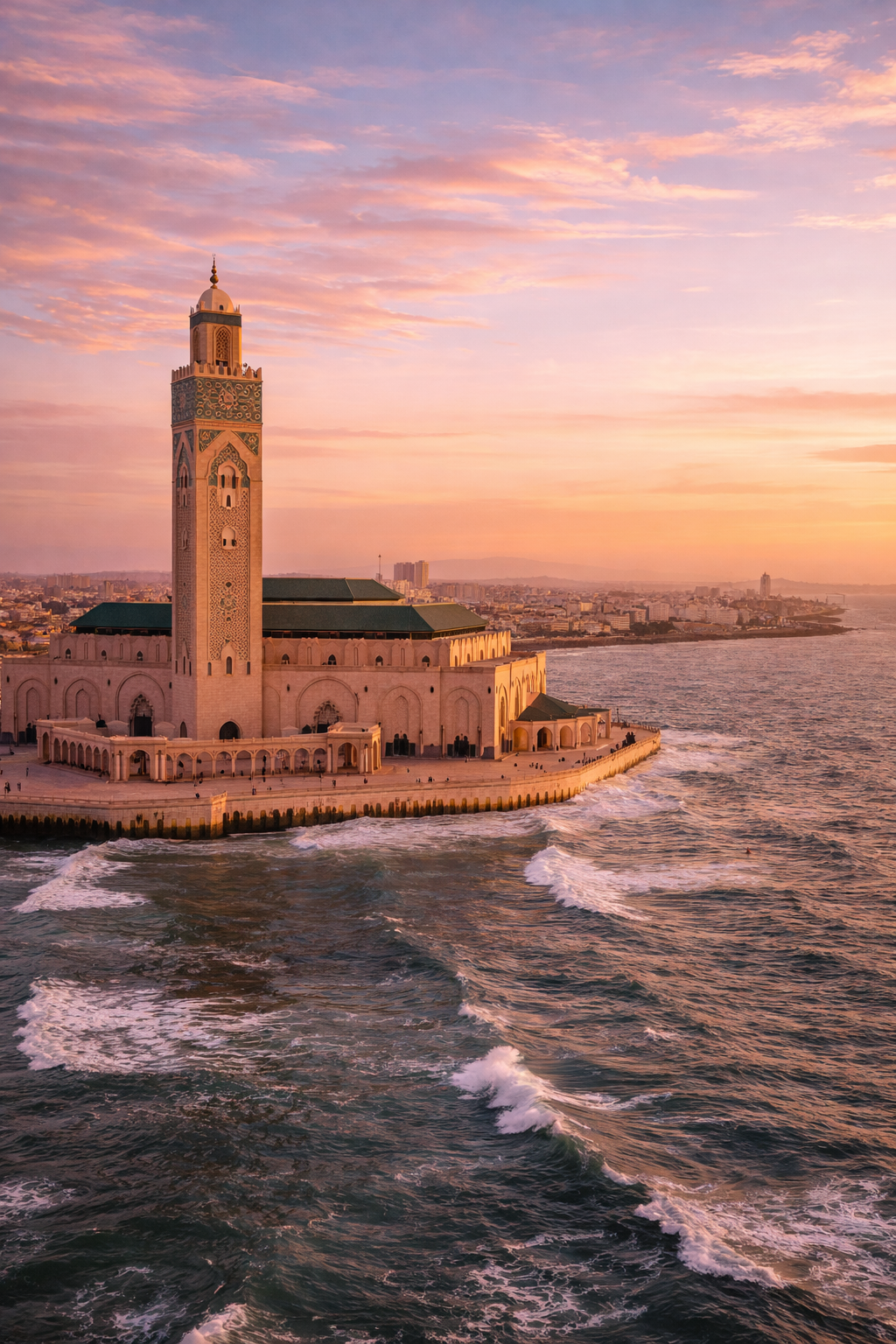
Casablanca is Morocco’s largest city and its main economic center. The city represents modern life, business activity, and urban energy.
Located on the Atlantic coast, Casablanca developed rapidly during the 20th century. Its growth transformed it into a major hub for trade, finance, and industry.
The city is home to the Hassan II Mosque, one of the largest mosques in the world. Built partly over the ocean, it stands as a powerful symbol of Moroccan craftsmanship and faith.
Casablanca’s architecture reflects a mix of traditional Moroccan design and modern influences. Art Deco buildings stand alongside contemporary structures.
Unlike imperial cities, Casablanca moves at a fast pace. Its lifestyle reflects modern Morocco, with busy streets, offices, cafés, and nightlife.
The coastal corniche offers relaxation and ocean views, providing balance to the city’s dynamic rhythm. It is a popular place for locals and visitors alike.
Today, Casablanca represents ambition, progress, and modern identity. It plays a central role in shaping Morocco’s economic future while maintaining its cultural roots.
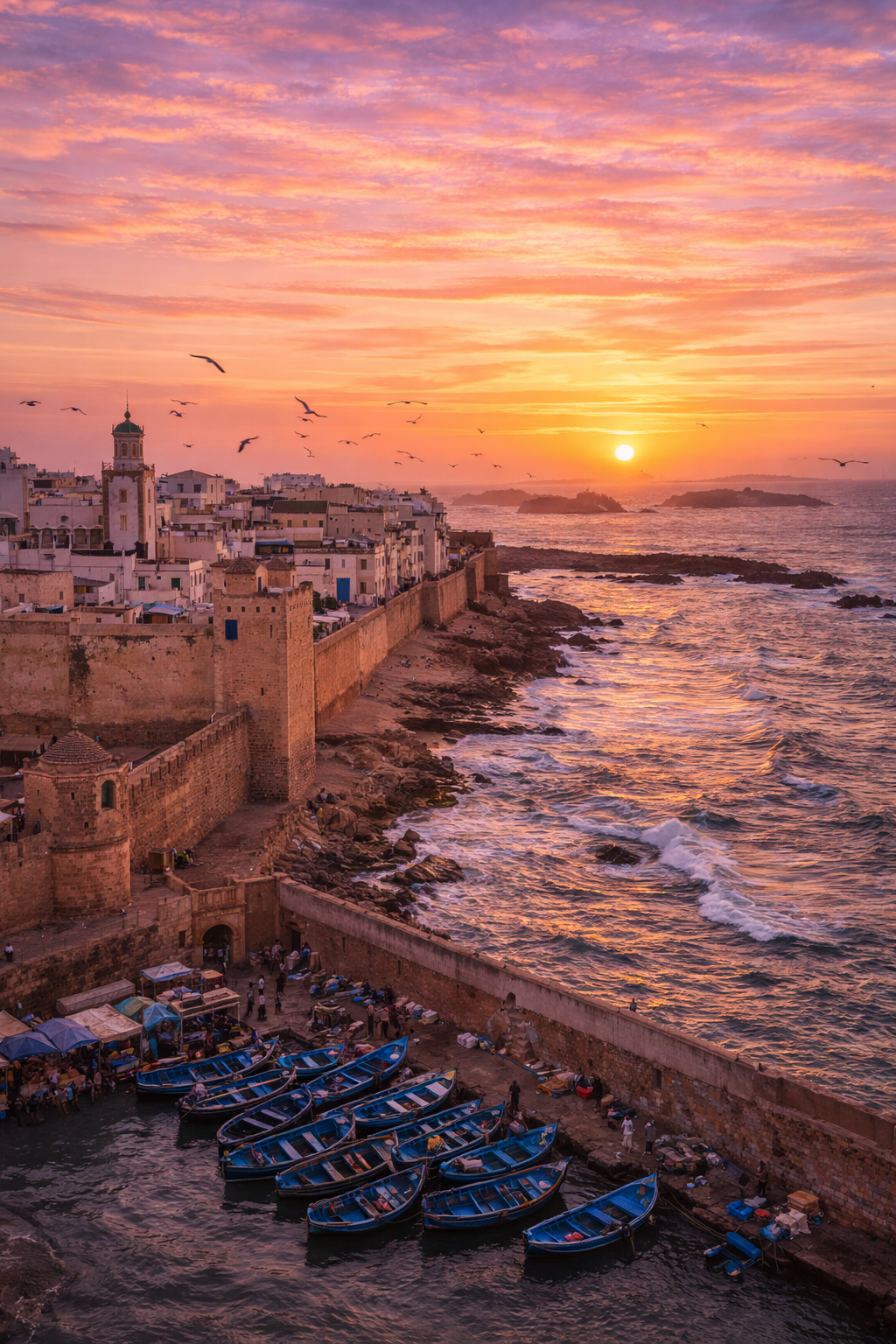
Essaouira is a coastal city known for its relaxed atmosphere and rich artistic spirit. The city reflects a unique blend of history, culture, and ocean life.
Located on the Atlantic coast, Essaouira has long been an important port city. Its strategic position made it a center of trade between Africa, Europe, and the Mediterranean.
The old medina of Essaouira is a UNESCO World Heritage Site, surrounded by strong stone walls and sea-facing ramparts. Its organized streets and white-and-blue buildings give the city a distinctive character.
The harbor remains one of the liveliest areas, where fishing boats, seagulls, and daily market activity create a vibrant scene. Fresh seafood is an important part of local life.
Essaouira is also famous for its music and arts culture. The city hosts festivals that celebrate traditional and international styles, attracting artists from around the world.
Strong ocean winds make Essaouira a popular destination for surfing and kiteboarding. The natural environment plays a major role in shaping the city’s lifestyle.
Today, Essaouira represents creativity, freedom, and calm. It offers a peaceful escape where history, art, and the sea come together in harmony.
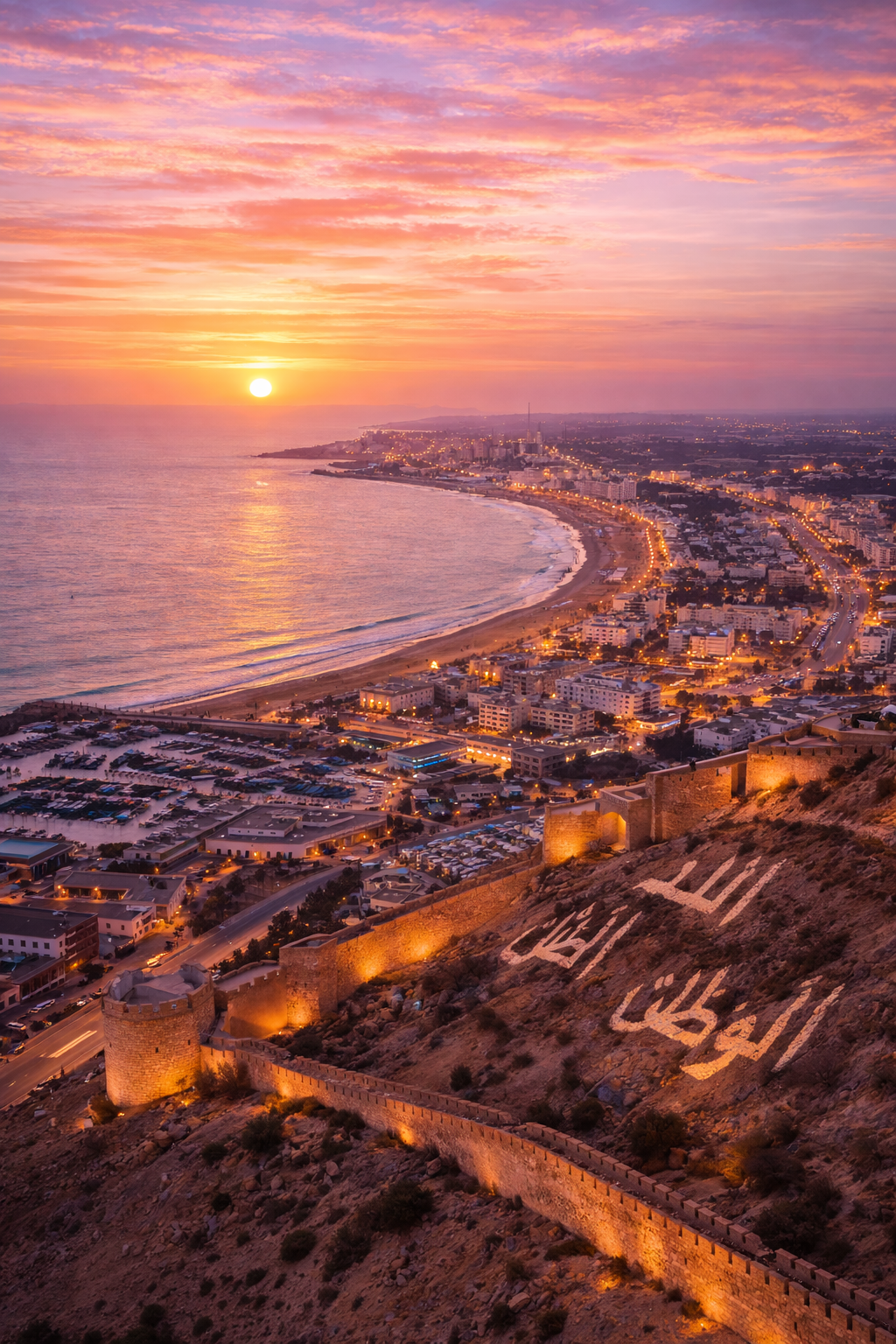
Agadir Souss is a modern coastal city located in southern Morocco, known for its wide beaches and sunny climate. The city reflects a relaxed lifestyle shaped by the ocean and natural surroundings.
After a major earthquake in 1960, Agadir was rebuilt with modern planning and open spaces. This reconstruction gave the city a contemporary character different from older imperial cities.
Agadir is one of Morocco’s most popular seaside destinations. Its long beach, promenade, and resorts attract visitors seeking rest and ocean views.
The Souss region surrounding Agadir is rich in Amazigh culture and traditions. Local customs, music, and crafts remain an important part of regional identity.
Agriculture plays a major role in the Souss Valley, especially the production of fruits and argan oil. This activity supports both the local economy and traditional practices.
The Agadir Oufella hill offers panoramic views over the city and the Atlantic Ocean. It stands as a reminder of the city’s history and resilience.
Today, Agadir Souss represents renewal, openness, and coastal beauty. It combines modern life with regional heritage, offering comfort, culture, and natural charm.
Morocco is a country of remarkable diversity, where every city offers a unique experience. From historic imperial capitals and coastal towns to desert landscapes and mountain regions, each destination tells its own story.
Through its culture, architecture, traditions, and hospitality, Morocco invites visitors to explore more than just places — it invites them to feel the spirit of the country. The blend of history and modern life creates journeys filled with meaning and discovery.
Whether traveling for adventure, relaxation, or cultural exploration, Morocco remains a destination that leaves lasting memories and inspires every visitor to return.
Discover More About Morocco
Moroccan cities are just the beginning of the journey. Continue exploring the culture, heritage, landscapes, and traditions that make Morocco a truly unforgettable destination.